Calculator Video Guides
One focused lesson per page, paired with the calculators, assumptions, and limitations needed to use it responsibly.
30 independently attributed lessons. Library reviewed 2026-09-02.

Selected because it demonstrates a practical educational mortgage-calculator workflow and keeps the focus on understanding inputs rather than promoting a lender. It adds a concrete walkthrough of principal, rate, term, and payment fields to the finance hub's calculator overview.
Watch guide
Selected because it explains the payment arithmetic step by step as educational material without recommending a financial product. It supplements the calculator by showing how principal, periodic interest, and payment count combine in the amortization formula.
Watch guide
Selected because it explains the calendar conventions commonly used for an estimated due date in an educational format while making clear that the date is an estimate. It adds context around last-menstrual-period and conception-date methods used by pregnancy calculators.
Watch guide
Selected because it explains total daily energy expenditure in an educational format as an estimate built from basal needs and activity rather than a fixed target. It complements the calorie calculator's BMR equation and activity multiplier with a practical interpretation of TDEE.
Watch guide
Selected because it explains amortization schedules from an educational source without promoting a lender, product, or refinancing offer. It reinforces how each payment is split between interest and principal, which complements the payment formula and amortization table.
Watch guide
Selected because it teaches compound growth from a neutral educational perspective rather than promising investment results. It supplements the future value model by showing why interest-on-interest can dominate long time horizons.
Watch guide
Selected because it focuses on the BMI formula and unit handling as educational screening context, without treatment or weight-loss claims. It supplements the page's equation by walking through a manual calculation and clarifying the weight-height relationship.
Watch guide
Selected because it explains BMR and total metabolic rate equations in an educational physiology context without diet marketing. It complements the calculator's Mifflin-St Jeor formula and activity multiplier assumptions.
Watch guide
Selected because leap years are directly relevant to exact age calculations and calendar-based date differences. It supplements the page's Gregorian calendar handling by explaining why some years add a February day.
Watch guide
Selected because Computerphile explains password choice in a practical security education format without harvesting user data. It supplements entropy and crack-time estimates by discussing why predictable human choices weaken passwords.
Watch guide
Selected because StatQuest provides a focused explanation of the summary statistics this calculator reports. It supplements the mean, variance, and standard deviation formulas with an intuitive walk-through of spread.
Watch guide
Selected because it explains a common t-test workflow from an educational source and avoids overstating p-values. It supplements the calculator's two-sample mode by connecting means, variability, and the test statistic.
Watch guide
Selected because it addresses the most common misuse of correlation results from a recognized educational series. It supplements the calculator's correlation coefficients by explaining why association and causation differ.
Watch guide
Selected because it explains the line-fitting idea behind the calculator's slope, intercept, and R-squared outputs. It supplements the least-squares formula by showing how a fitted line summarizes paired x-y data.
Watch guide
Selected because it introduces chi-square testing with categorical data in a broad educational format. It supplements the calculator's goodness-of-fit and independence modes by explaining observed versus expected counts.
Watch guide
Selected because it explains one-dimensional motion and constant-acceleration variables used by this calculator. It supplements the kinematics formula by distinguishing position, velocity, acceleration, and time.
Watch guide
Selected because it clarifies the core variables needed before using displacement equations. It supplements the displacement formula by showing how position, velocity, and acceleration relate conceptually.
Watch guide
Selected because it directly explains F equals ma from a trusted educational source. It supplements the calculator's force, mass, and acceleration relationship with conceptual examples.
Watch guide
Selected because it explains kinetic energy in a general physics lesson without unsafe demonstrations or sensational claims. It supplements the KE formula by explaining energy of motion and how velocity affects energy.
Watch guide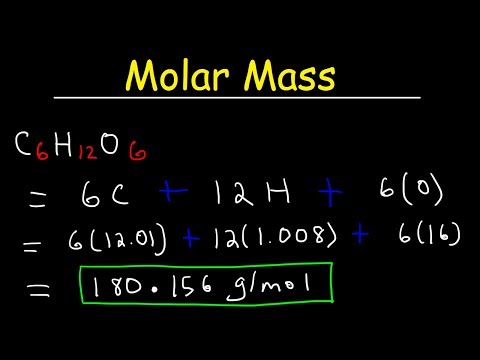
Selected because it demonstrates the same periodic-table lookup and formula parsing logic used by the molar mass calculator. It supplements the page by showing how atom counts and atomic masses combine into total molar mass.
Watch guide
Selected because it teaches perimeter and area fundamentals from a recognized educational source. It supplements the geometry calculator's area and perimeter formulas with basic shape reasoning.
Watch guide
Selected because it explains metric place-value structure that supports many converter categories. It supplements the hub's base-unit method by showing why metric conversions often move by powers of ten.
Watch guide
Selected because it compares measurement systems from an educational source and supports length conversion context. It supplements meter, foot, inch, and mile conversions by explaining why systems use different reference units.
Watch guide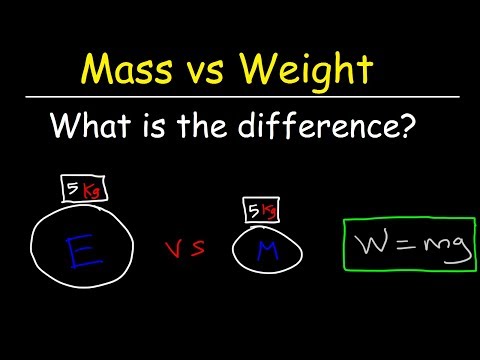
Selected because it clarifies the common mass-versus-weight confusion behind kilogram, pound, and force-related units. It supplements the converter by explaining why everyday weight conversion often treats mass and weight differently from physics.
Watch guide
Selected because it walks through the offset formula needed for temperature conversions. It supplements the calculator by showing why Celsius and Fahrenheit need addition and subtraction, not only multiplication.
Watch guide
Selected because it explains volume as a three-dimensional measurement rather than a memorized conversion table. It supplements liter, gallon, and cubic-unit conversions by reinforcing why volume units are cubic or capacity based.
Watch guide
Selected because it explains area as a square-unit concept that directly supports area conversions. It supplements the converter by clarifying why area conversion factors are squared rather than linear.
Watch guide
Selected because it explains time units and measurement structure in a simple educational format. It supplements second, minute, hour, day, and year conversions by reviewing how time units relate.
Watch guide
Selected because it explains pressure as force over area, which supports pascal, bar, psi, and atmosphere conversions. It supplements the converter by clarifying what pressure units measure before users compare scales.
Watch guide
Selected because it directly addresses the most common data-unit confusion: bits versus bytes. It supplements decimal and binary storage conversions by explaining why lowercase b and uppercase B matter.
Watch guide